

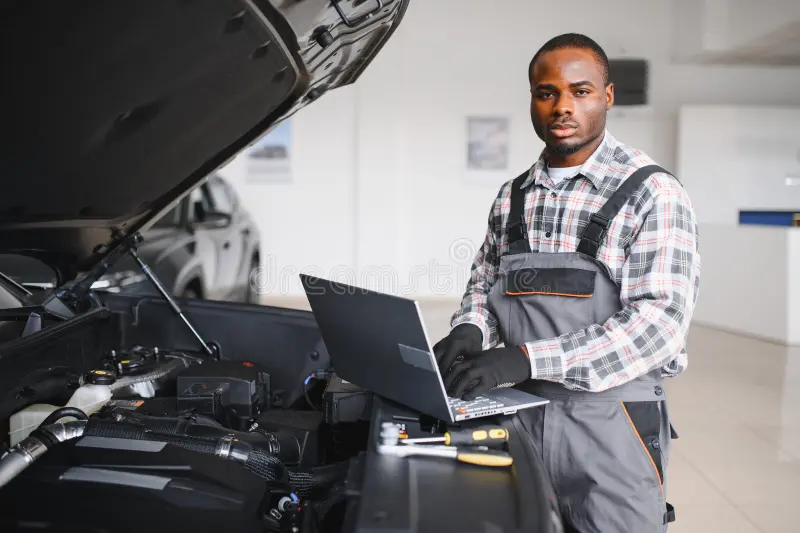
Few inventions have reshaped human civilization as profoundly as the automobile. From its nascent years as a steam-powered curiosity to today’s sleek, AI-enhanced electric vehicles, the automobile has evolved not only in form and function but in its cultural and societal role. Its influence extends far beyond mechanics and manufacturing; the automobile has impacted urban design, environmental policy, human behavior, and even notions of freedom and identity. This article delves into the development of the automobile, its multifaceted influence on modern life, and the challenges and innovations that are shaping its future.
The story of the automobile begins in the late 19th century, a time of fervent experimentation. While many inventors across Europe and America contributed to the early development of self-propelled vehicles, Karl Benz is often credited with creating the first true automobile in 1885: the Benz Patent-Motorwagen. His three-wheeled vehicle, powered by an internal combustion engine, was revolutionary, albeit primitive by today’s standards. Yet, it laid the groundwork for what would become a defining technology of the 20th century.
In the early decades of the 1900s, the automobile transitioned from a luxury item for the wealthy to a product within reach of the emerging middle class. This transformation was propelled by the industrial genius of Henry Ford, who introduced assembly line manufacturing techniques that dramatically reduced costs and increased production speed. The Model T, introduced in 1908, was not just a vehicle—it was a symbol of democratized mobility. People could now travel farther and faster than ever before, unbound by railways and the limitations of horse-drawn carriages.
Throughout the 20th century, the automobile grew in complexity and cultural significance. After World War II, a booming global economy and a widespread push for modernization led to an explosion in car ownership. Suburban sprawl became synonymous with personal vehicles, especially in the United States, where the construction of vast highway systems enabled the growth of commuter lifestyles. Cars became not only tools of transportation but expressions of personality. Sleek convertibles, rugged trucks, and high-performance sports cars each told a story about their owners’ tastes, aspirations, and lifestyles.
Automobiles also began to reflect broader cultural movements. The 1960s saw the rise of muscle cars in America—bold, loud, and unapologetically powerful—mirroring the rebellious spirit of the era. Meanwhile, European manufacturers like Mercedes-Benz and BMW emphasized engineering precision and luxury, setting new standards for performance and refinement. Japan’s automotive industry gained prominence in the 1970s and 1980s, offering affordable, fuel-efficient cars that reshaped global markets. Toyota, Honda, and Nissan proved that reliability and economy could win over consumers in a volatile energy climate.
However, this golden age of the automobile did not come without costs. By the latter part of the 20th century, concerns about pollution, climate change, and urban congestion began to overshadow the once-unquestioned benefits of car ownership. Smog-choked cities, rising oil prices, and growing awareness of greenhouse gas emissions forced both consumers and manufacturers to reconsider the future of mobility. Governments introduced stricter emissions standards, and a nascent interest in alternative fuels began to stir.
Today, the automobile is in the midst of another profound transformation—arguably the most consequential since its invention. The electric vehicle (EV) revolution, spearheaded by companies like Tesla, has redefined expectations around sustainability and performance. With no tailpipe emissions and significantly lower running costs, EVs offer a compelling vision for cleaner, more efficient transportation. Legacy automakers such as General Motors, Ford, Volkswagen, and Volvo have pivoted aggressively, announcing plans to phase out internal combustion engines in favor of electric alternatives within the coming decades.
Beyond the shift in powertrains, the rise of autonomous driving technology signals yet another paradigm shift. Advances in artificial intelligence, sensor technology, and data processing are making self-driving cars increasingly viable. While full autonomy remains elusive and fraught with regulatory and ethical complexities, features such as adaptive cruise control, lane-keeping assistance, and automatic emergency braking are already enhancing safety and comfort for millions of drivers worldwide.
This era of technological convergence—combining electric propulsion, connectivity, and autonomy—is redefining what a car is and what it can do. Vehicles are becoming extensions of digital ecosystems, equipped with voice assistants, over-the-air software updates, and seamless integration with smartphones and smart homes. Mobility itself is being reimagined; ride-sharing services, car subscription models, and micro-mobility options such as e-scooters and electric bikes are challenging the primacy of traditional car ownership, especially in urban environments.
Yet, for all the innovation and excitement, the automobile still faces significant challenges. Infrastructure for electric vehicles, such as charging stations, is unevenly distributed, posing barriers to mass adoption. The raw materials needed for EV batteries—lithium, cobalt, and nickel—raise environmental and geopolitical concerns. Moreover, the dream of autonomous vehicles operating safely in complex, real-world conditions continues to be tested by technological limitations and unpredictable human behavior.
Despite these hurdles, the future of the automobile remains one of extraordinary promise. As engineers, designers, and policymakers collaborate to create more sustainable, intelligent, and inclusive mobility solutions, the automobile will continue to adapt. Its form may change—smaller, cleaner, smarter—but its role as a cornerstone of human mobility is unlikely to diminish.
In many ways, the car is a mirror of society itself: ambitious, flawed, ever-evolving. It has carried us through industrial revolutions, social upheavals, and now into a digital age brimming with opportunity and responsibility. As we steer toward this future, one truth remains: the automobile is far more than a machine. It is a vessel of progress, a cultural icon, and an enduring testament to the human drive to move forward.