

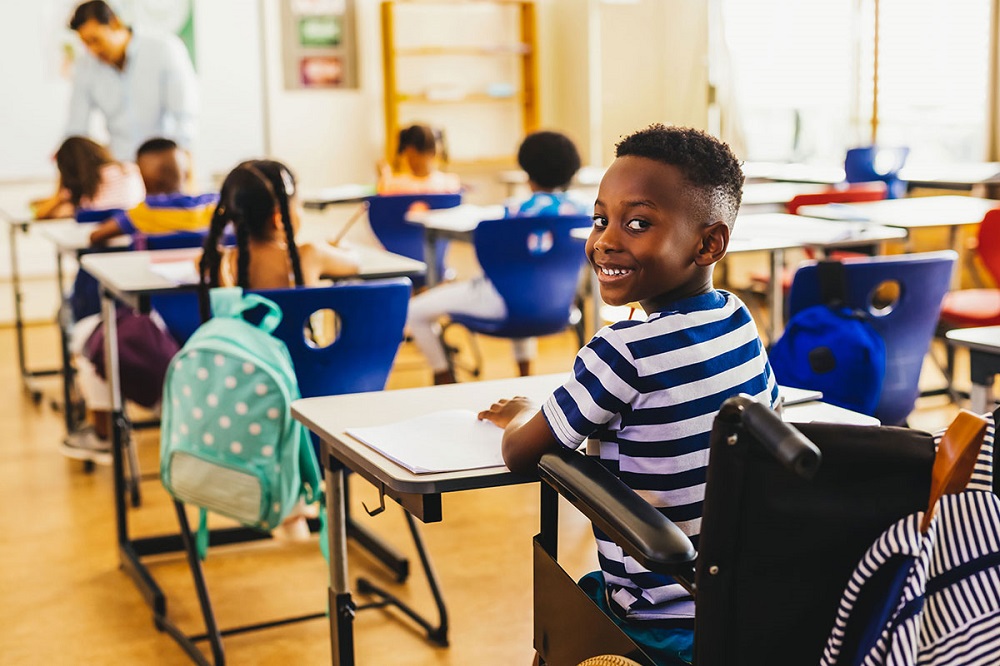
Educational systems historically relied on segregation to manage student diversity. Learners with physical, neurodivergent, or developmental differences were routinely placed in isolated classrooms, separated from their neurotypical and non-disabled peers. The underlying assumption was that specialized needs required physical separation to optimize instruction.
Modern educational research has fundamentally challenged this premise. The shift toward inclusive education—where students of all abilities, backgrounds, and learning styles are integrated into the same general education classrooms—has proven that academic environments thrive on diversity. Inclusion is not merely a social ideology or a checklist for regulatory compliance. Instead, it is a structural methodology that fundamentally elevates the quality of instruction, enhances emotional development, and prepares all students for a complex world.
The Core Foundations of Inclusive Classrooms
To understand how inclusive education elevates the learning environment, one must look at its structural framework. True inclusion changes how teachers teach, how classrooms are arranged, and how success is measured.
Universal Design for Learning
Inclusive education relies heavily on Universal Design for Learning, a teaching framework based on the premise that there is no single, average learner. Instead of designing a lesson plan for the typical student and then making modifications for individuals with special needs, educators build flexible curricula from the ground up.
This framework operates on three primary principles:
-
Multiple Means of Engagement: Offering diverse ways to motivate students, sustain their interest, and build their determination.
-
Multiple Means of Representation: Presenting information in various formats, such as text, audio, video, and hands-on graphics, so that comprehension does not depend on a single sensory pathway.
-
Multiple Means of Action and Expression: Allowing students to demonstrate their knowledge through diverse media, including oral presentations, written essays, digital media, or physical projects.
When teachers implement these flexible strategies, the entire classroom benefits. A neurotypical student who struggles with reading retention might thrive when given access to an audio presentation, while a student with an auditory processing condition benefits from the accompanying text. The environment becomes inherently supportive for everyone, eliminating the stigma of special accommodations.
Differentiated Instruction as a Standard
In an inclusive classroom, differentiation is the operational norm rather than an afterthought. Teachers modify their instructional delivery, assignments, and assessment methods to match the readiness levels and interests of individual students. This approach rejects the rigid lectures that leave struggling students behind and bore advanced learners. Because the instructional pace is dynamic, every student is appropriately challenged, leading to higher levels of academic engagement across the board.
Boosting Cognitive Growth and Academic Excellence
A frequent misconception is that inclusive classrooms slow down the academic progress of neurotypical students or those without learning disabilities. Data consistently contradicts this assumption, showing that inclusive environments stimulate cognitive growth for all participants.
The Power of Peer Modeling and Collaborative Learning
Human beings learn through imitation and social interaction. In an inclusive setting, students with diverse skill sets serve as natural peer models for one another. A student with strong executive functioning skills might model organization and time management during a group project, while a student with exceptional creative intuition offers unique problem-solving perspectives.
Furthermore, when students without disabilities explain complex concepts to their peers who may be struggling, they engage in deep cognitive processing. The act of teaching a concept requires an individual to clarify their own understanding, organize their thoughts, and find accessible language. This cooperative exchange deepens subject matter mastery for the student acting as the tutor while providing accessible instruction to the student receiving help.
Cultivating High Expectations
Historically, segregated classrooms suffered from lowered expectations. Students placed in isolated tracks were frequently given simplified work that limited their intellectual horizons. Inclusive classrooms operate under the philosophy that all students can achieve high standards when provided with the correct scaffolding. When educators maintain high expectations for every student, it creates a psychological environment focused on growth, resilience, and capability. Students rise to the level of expectation set for them.
Nurturing Social-Emotional Intelligence and Empathy
While academic metrics are critical, a learning environment must also foster character development and social-emotional intelligence. Inclusive classrooms excel at building soft skills that cannot be taught effectively through textbooks alone.
Reducing Stigma and Combating Bias
Familiarity breeds understanding, while isolation breeds fear and stereotyping. When children grow up sharing desks, playing games, and collaborating on projects with peers who speak differently, move differently, or process information differently, disability becomes a normal variation of the human experience rather than an alien concept.
This daily interaction demystifies differences and reduces bullying. Students learn to see the individual behind the diagnosis or the cultural barrier, systematically dismantling implicit biases before they can solidify into adulthood prejudices.
Building Emotional Resilience and Compassion
Living and learning in a diverse environment teaches students the value of patience, perspective-taking, and active listening. They witness firsthand the unique challenges their peers face and observe the persistence required to overcome them.
This exposure builds an authentic sense of empathy. Students do not just learn to feel sorry for others; they learn to actively support their peers, accommodate others’ needs, and celebrate collective victories. These emotional competencies are foundational for developing collaborative, compassionate citizens.
Optimization of Resources and Support Infrastructures
Inclusive education alters how school districts deploy their professional talent and physical assets. Rather than dividing resources across separate facilities, inclusion centralizes support where it can do the most good.
Collaborative Teaching Models
In an effective inclusive classroom, general education teachers and special education teachers work side-by-side. This co-teaching model combines the subject-matter expertise of the general educator with the specialized instructional strategies of the special educator.
The integration of these distinct skill sets ensures that the classroom benefits from two highly trained professionals simultaneously. The special education teacher can provide immediate, subtle interventions to any student who is losing focus, not just those with an individualized education program. This dual-presence significantly lowers the student-to-teacher ratio and ensures that help is always readily available.
Holistic Resource Allocation
The comparative structural differences between segregated and inclusive educational setups demonstrate how resource consolidation maximizes efficiency:
Long-Term Societal and Professional Preparation
The ultimate goal of primary and secondary education is to prepare youth for successful integration into adult society and the modern workforce. Isolated educational environments fail to accurately mirror the realities of the professional world.
Real-World Realism in the Classroom
The modern global economy values diversity, cross-cultural collaboration, and adaptable communication styles. A student who spends their developmental years in a homogenous, segregated classroom will experience significant friction when entering a diverse workforce.
Inclusive classrooms function as a microcosm of macro-society. By learning alongside a wide spectrum of individuals, students master the communication strategies, adaptive behaviors, and collaborative tools required to navigate complex corporate and social environments later in life.
Fostering Self-Advocacy and Independence
For students with disabilities or learning differences, inclusive environments provide critical opportunities to practice self-advocacy. Being surrounded by general expectations forces these learners to articulate their needs, identify their strengths, and actively manage their learning strategies.
Simultaneously, it encourages independence by preventing the over-dependence that can sometimes develop in highly sheltered, isolated settings. They learn to navigate the world as it is, built on a foundation of confidence and self-awareness.
Frequently Asked Questions
What specific strategies can teachers use to manage behavioral challenges in an inclusive classroom?
Teachers manage behavioral challenges by implementing positive behavioral interventions and supports rather than relying on punitive measures. This involves establishing clear, predictable classroom routines, teaching emotional regulation explicitly, and creating quiet decompression zones within the room. When educators identify the underlying triggers of an unwanted behavior, they can adjust the environment to prevent the disruption before it begins.
How do advanced or gifted students benefit from being in an inclusive classroom environment?
Advanced students benefit through deepened cognitive processing and expanded enrichment opportunities. In an inclusive model driven by differentiated instruction, gifted students are not restricted to standard assignments. Instead, they can pursue independent study projects, dive deeper into complex research topics, and refine their leadership and communication skills by guiding collaborative peer groups.
What is the role of school administration in ensuring the success of inclusive education?
School administration is responsible for providing the systemic infrastructure required for inclusion to thrive. This includes scheduling mandatory collaborative planning time for co-teachers, funding continuous professional development in universal design methodologies, keeping class sizes manageable, and fostering an overarching school culture that values diversity and belonging.
How does inclusive education support students who are English language learners?
Inclusive education supports English language learners by immersing them in language-rich environments where they interact continually with native speakers. The multi-sensory presentation methods and flexible representation options inherent in universal design frameworks allow these students to comprehend academic content even as they are still developing their formal English language proficiency.
How can parents of neurotypical children be assured that inclusion will not diminish their child’s education?
Parents can look to extensive educational research showing that academic performance remains stable or improves for neurotypical children in inclusive settings. The presence of a co-teacher increases individual attention, the emphasis on diverse learning styles sharpens critical thinking, and the focus on social-emotional development builds strong leadership and interpersonal skills that are vital for future academic and career success.
What are the financial implications for a school district transitioning to an inclusive model?
The initial transition can require investments in professional development, adaptive software, and physical classroom modifications. However, over the long term, inclusive models reduce the substantial administrative and operational costs associated with maintaining separate facilities, specialized transportation networks, and redundant administrative structures for isolated special education programs.